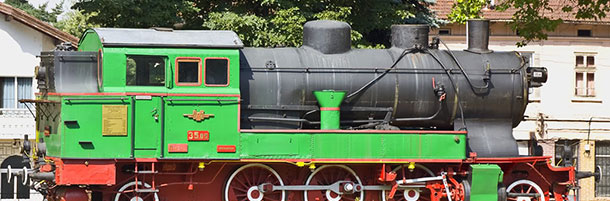
The village originated in 18-19 century, but it strengthened by the construction of the railway Ruse - Stara Zagora in the early 20th century when it became an important railway junction.
According to legend, during the reign of Tsar Ivan Asen II, the summer palace of the tsar was above the village near the quarter of Neychevtsi. So far the place has been called the Town and it is a frequent subject of treasure hunting raids. Again according to legend, the horses of the Asens grazed on the meadows on the trough below the village. The name of the present village - Tzareva Livada (Tsar's Meadow) originates from there. The plateau near the village is the historic place Strinava. It was more difficult to access and in the Middle Ages it was fortified as a strategic fortified stronghold. Today, remnants of fortified walls and foundations of buildings have been preserved. One of the fortifications found in the area - 2 km to the north of the village of Tsareva Levada is identified with the Fortress of Strinava (Tsarovishteto), mentioned by the Byzantine writers in connection with battles that took place there. The legendary place where the brothers Asen and Peter were born by their Cuman mother and Bulgarian father, and later they often came to their summer residence Strinava to rest and hunt. Along with three fortresses belonging to the fortified area – Boruna, Kuklata and Kaleto, it played an important role in the defense of the Second Bulgarian State. Some of these fortresses have three-row walls that are up to 2 meters thick. Coins, arrows, spears, swords, padlock weighing 13 kg are found in the area. This is clear evidence of intense life. Around the Strinava’s plateau of an area of about 5-6 square kilometers, the area abounds with names of places such as Tsar Asenik, Tsar Kaolyanik, Tsaryuvi Bahchi, Tsarskoto, Starnata, Tsar Asen’s Pathway, the village Tsarevi Livadi itself, etc. all the way to Tryavna.
In 1949 the village was given a new name Varbanovo in honour of the communist partisan Varban Genchev. The old name was restored in the ‘90s.